How to Store Microgreens and Keep Them Fresh
Microgreens are harvested young, which is exactly what makes them tender — and also what makes them a little more delicate than the vegetables you're used to keeping in the fridge for a week. The good news is that storing them well is not complicated.
Sprinkle Greens · Updated: 1 September 2026
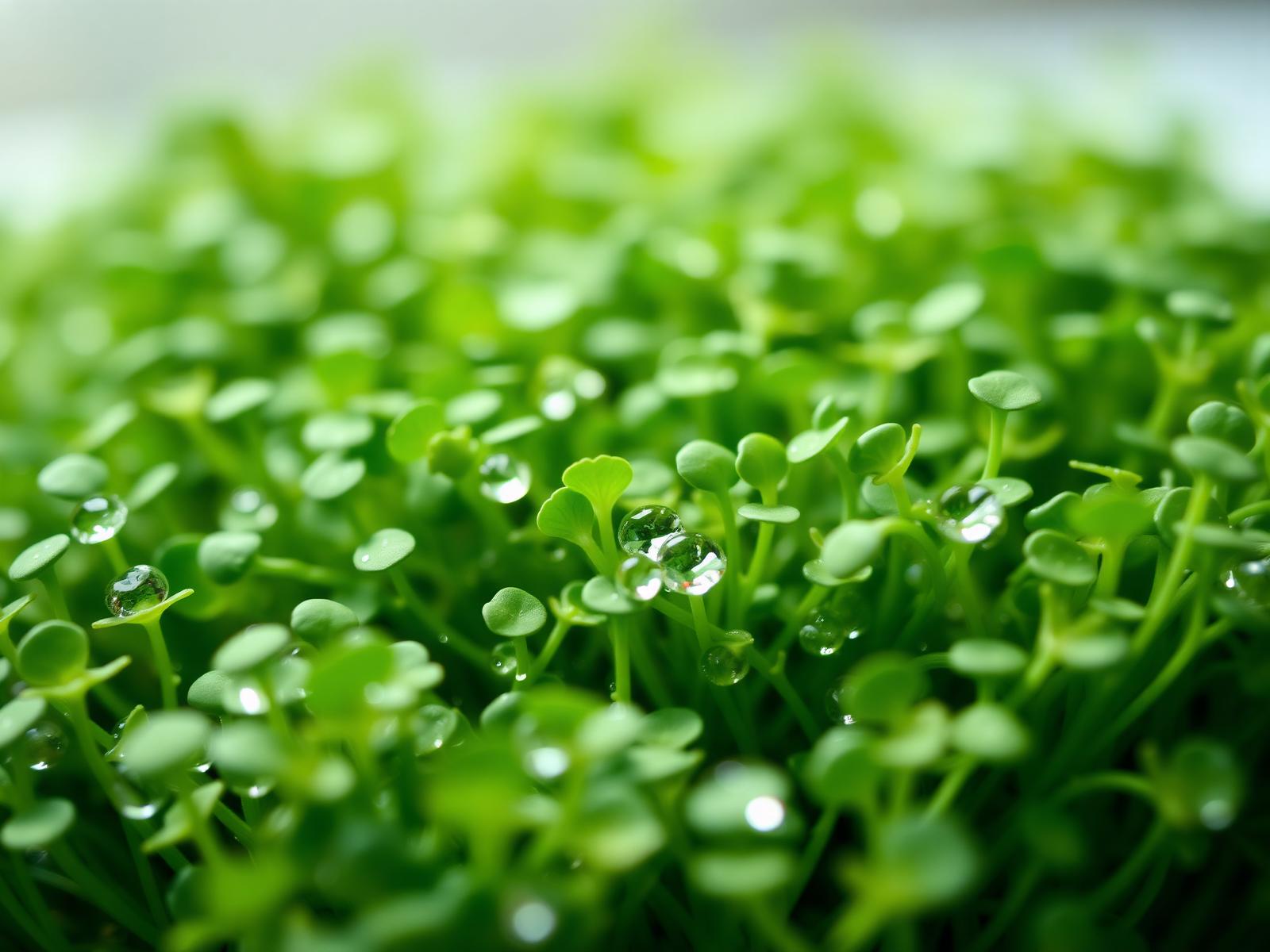
Almost everything about keeping microgreens fresh comes down to three things: moisture, temperature and airflow. Get those roughly right and your box will hold its texture, colour and flavour noticeably longer. Get them wrong — usually by leaving the greens wet, or leaving them out of the fridge — and they soften much faster.
This guide is written for the everyday situation: your box has just arrived, you're planning to use it across a few meals, and you'd like it to still be good tomorrow and the day after. If you're new to these greens altogether, our beginner's guide to what microgreens are is a useful starting point.
How to Store Microgreens After Delivery
The first ten minutes after your box arrives matter more than anything else you'll do later. Here's the simple sequence we'd suggest.
- Check them when they arrive. Open the packaging, look at the greens and give them a quick sniff — they should look lively and smell clean and plant-like.
- Deal with any excess moisture gently. If you notice condensation inside the packaging or water pooling anywhere, wipe or blot it away rather than sealing that moisture in.
- Refrigerate them promptly. Don't let the box sit on the kitchen counter while you finish other things.
- Keep them in their original packaging if it's designed for refrigeration and airflow — moving them around usually means extra handling and bruised leaves.
- Avoid leaving them at room temperature for long stretches, especially on warm Bangalore afternoons or anywhere near a window or stove.
Should You Wash Microgreens Before Storing Them?
This is the single most common habit that shortens freshness. Washing the whole box the moment it arrives adds water to leaves that are already delicate, and that extra moisture usually sits in the container for the rest of the week.
Washing isn't a problem in itself — it's the timing. As a general approach, store them dry and wash only the portion you're about to eat, unless the packaging you received gives specific instructions that say otherwise. Always follow the guidance on the pack first.
- Store dry whenever you can — dry greens hold their crispness longer.
- Wash just the handful you need, right before it goes into the meal.
- If you do wash more than you'll use, handle it gently and let it drain and dry before it goes back into the fridge — don't store microgreens while they're excessively wet.
The Best Temperature for Storing Microgreens
Refrigeration is generally the most effective way to slow the deterioration of any fresh microgreen. You don't need a special setting or a dedicated drawer — ordinary refrigerator conditions are appropriate. If your fridge has a temperature dial, somewhere around 4°C is a practical target for fresh produce.
- Keep them refrigerated rather than in a cool cupboard.
- Avoid freezing them — the texture doesn't survive it.
- Avoid the very back of the fridge or spots right beside the freezer vent, where produce can freeze accidentally.
- Avoid taking the box in and out repeatedly; each round trip warms the greens and adds condensation.
How to Manage Moisture
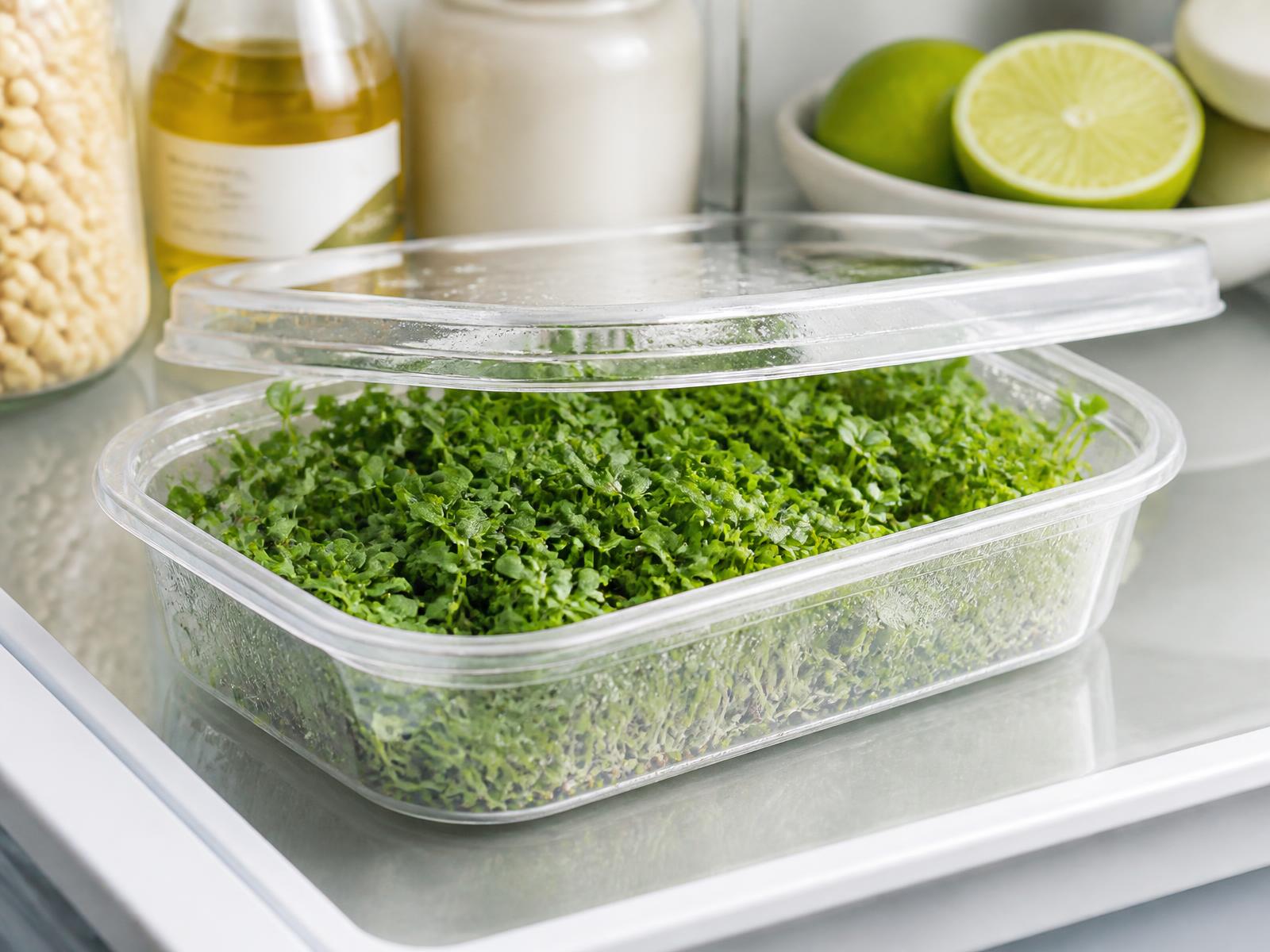
Moisture is the balance you're really managing. Too much and the leaves turn soggy and break down quickly. Too little and they wilt and dry out. The sweet spot is greens that are dry to the touch but stored somewhere cool and slightly humid, like a covered container in the fridge.
Condensation is worth watching for. When a cold container is opened in a warm kitchen, water forms on the inside of the lid and drips back onto the greens. Wiping that away when you notice it makes a real difference over a few days.
- Pour off or blot any standing water — greens should never sit in it.
- Handle with clean, dry hands and lift rather than press; crushed leaves break down first.
- Don't seal damp microgreens into a completely airtight container — a little airflow helps.
- Use clean, food-safe containers or the original packaging if it's built for refrigeration.
- Give the greens some headroom instead of packing them down tightly.
How Long Do Microgreens Stay Fresh?
There's no honest single number here, and anyone giving you one is guessing. With proper refrigeration and handling, microgreens can remain fresh for several days, but the exact storage life varies by variety and conditions.
What actually changes the answer:
- Variety — leaf structure and moisture content differ a lot between greens.
- Harvest stage and how fresh they were when you received them.
- Moisture, both inside the packaging and added by washing.
- Packaging — whether it allows some airflow or traps humidity.
- Your refrigerator's temperature, humidity and how full it is.
- Handling after delivery — how often the box is opened and how gently the greens are picked over.
The practical approach is to stop counting days and start checking. A box judged by look and smell will tell you more than a date ever could.
How to Tell If Microgreens Are Still Fresh
Microgreens in good condition generally:
- Look vibrant, with clear colour rather than yellowing or dull patches.
- Have stems and leaves that feel firm or crisp in the way that variety normally does.
- Smell fresh and plant-like, with nothing sour or musty about it.
- Are not excessively wet, matted down or slimy.
Signs that a box, or the affected part of it, should be discarded:
- Visible mould of any kind.
- An unusual, sour or off smell.
- Significant sliminess.
- Extensive decay, mushy areas or widespread browning.
- Any other obvious signs of spoilage.
Common Storage Mistakes to Avoid
- Leaving microgreens outside the refrigerator for extended periods.
- Storing them while they're still excessively wet.
- Sealing wet microgreens into a completely airtight container.
- Freezing them.
- Washing the entire box immediately when you won't be eating it all soon.
- Repeatedly opening the container and handling the greens.
- Crushing delicate leaves under heavier items on a crowded fridge shelf.
Different Microgreens May Store Differently
Not every variety behaves the same way in the fridge, because leaf shape, stem thickness and natural moisture content all differ. Sturdier shoots such as pea and sunflower feel quite different from the finer leaves of broccoli, kale, pak choi, arugula or radish varieties like pink radish and Sango purple radish.
Rather than assigning a number of days to each one, it's more useful to notice how your own boxes behave. If a particular variety softens sooner in your fridge, plan to use that one earlier in the week and keep the hardier shoots for later. If you'd like ideas for using them up, our guide on How to Eat Microgreens has plenty of everyday options. And if you're still sorting out how microgreens differ from the sprouts you may already buy, that's covered in microgreens vs sprouts.
The Easiest Routine for Fresh Microgreens
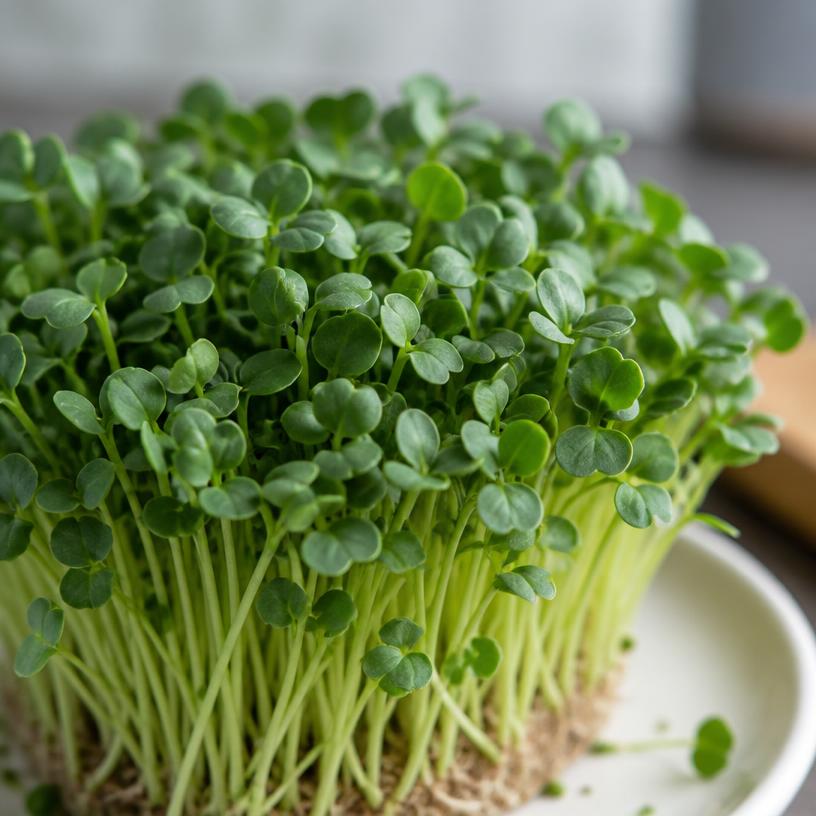
If you remember nothing else from this guide, remember these four steps.
01
Receive
Open the box, take a quick look at the greens and wipe away any condensation you can see on the packaging.
02
Refrigerate
Move them into the fridge fairly soon after they arrive, ideally on a shelf rather than the coldest back corner.
03
Control moisture
Keep them dry rather than wet, allow a little airflow, and swap out a damp paper towel if you're using one.
04
Use regularly
Take out only what you need for that meal, close the container gently and use the box across a few days.
Ready to Add Fresh Microgreens to Your Meals?
Sprinkle Greens grows microgreens in small batches in Bangalore and delivers across our service area, so what reaches you has been cut recently rather than sitting in storage. If you're not sure where to begin, pick one mild variety and one with more punch, and see which one your kitchen reaches for.
Frequently Asked Questions About Storing Microgreens
Yes. Microgreens are delicate fresh produce, and refrigeration is generally the best way to slow deterioration. Put them in the fridge soon after they arrive and take out only what you plan to use.
It's usually better to store them dry and wash only the amount you're about to eat, unless the packaging gives different instructions. Washing the whole box before storage adds moisture, and extra moisture tends to shorten freshness.
There is no single number. With proper refrigeration and handling, microgreens can remain fresh for several days, but the exact storage life varies by variety, freshness at harvest, moisture, packaging, your refrigerator's conditions and how they are handled after delivery. Judge each box by how it looks and smells.
Freezing is not recommended. These are tender leaves and stems, and freezing damages their structure, so they thaw limp and watery instead of crisp. Keep them refrigerated and away from the coldest spots where they might freeze accidentally.
Fresh microgreens look vibrant, feel firm for their variety and smell clean and plant-like. If you see visible mould, notice an off or sour smell, or find significant sliminess or extensive decay, discard the affected product rather than trying to salvage it.
You May Also Like

Sprinkle Greens · Everyday ideas
How to Eat Microgreens: 15 Easy Ways
Poha, dal, chaat, salads, sandwiches and smoothies — simple ways to use up a box.
Read the guide →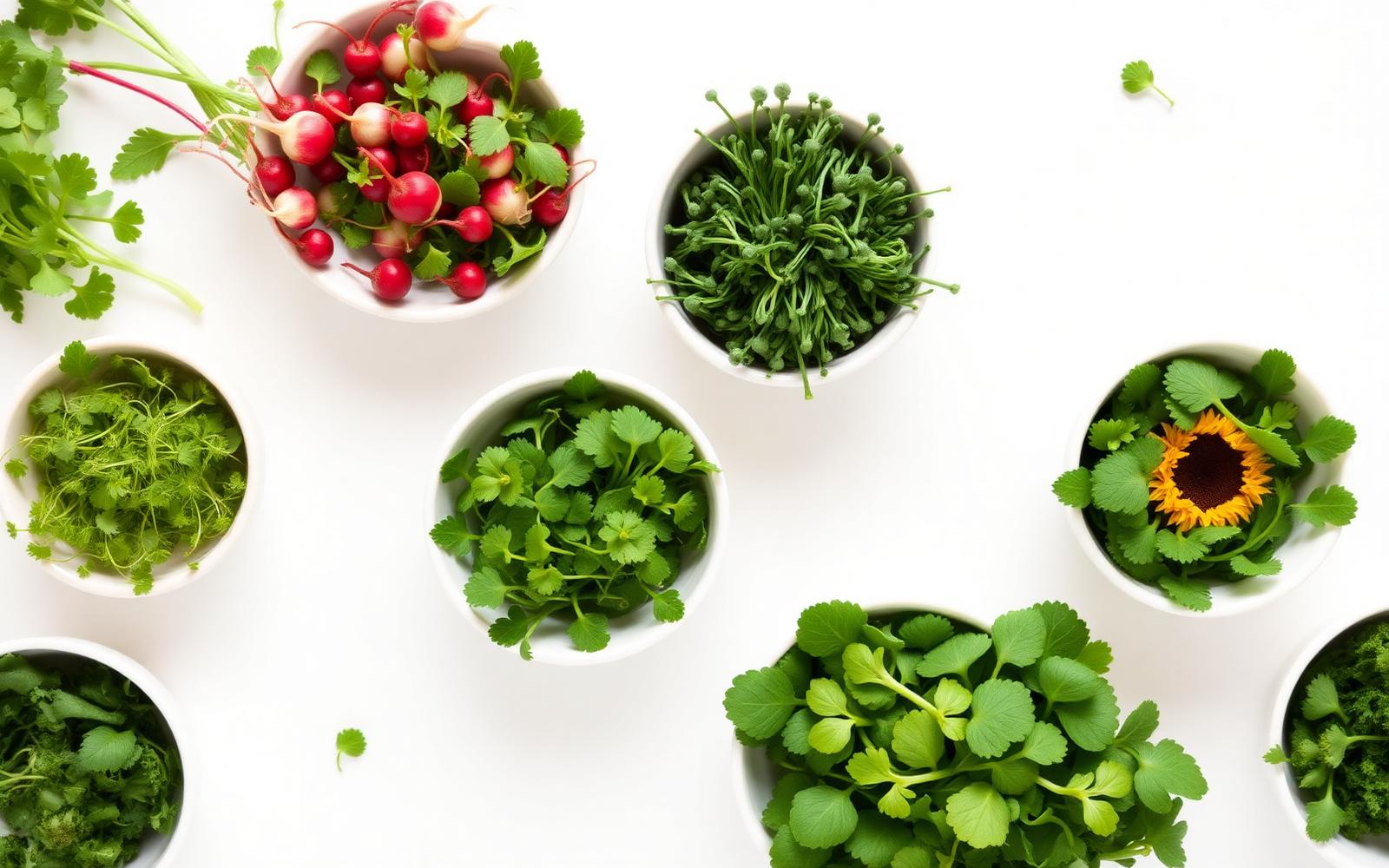
Sprinkle Greens · Explained simply
Microgreens vs Sprouts: What's the Difference?
Growing method, harvest stage, flavour and texture, side by side.
Read the guide →More reading: all articles · Sprinkle Greens home